
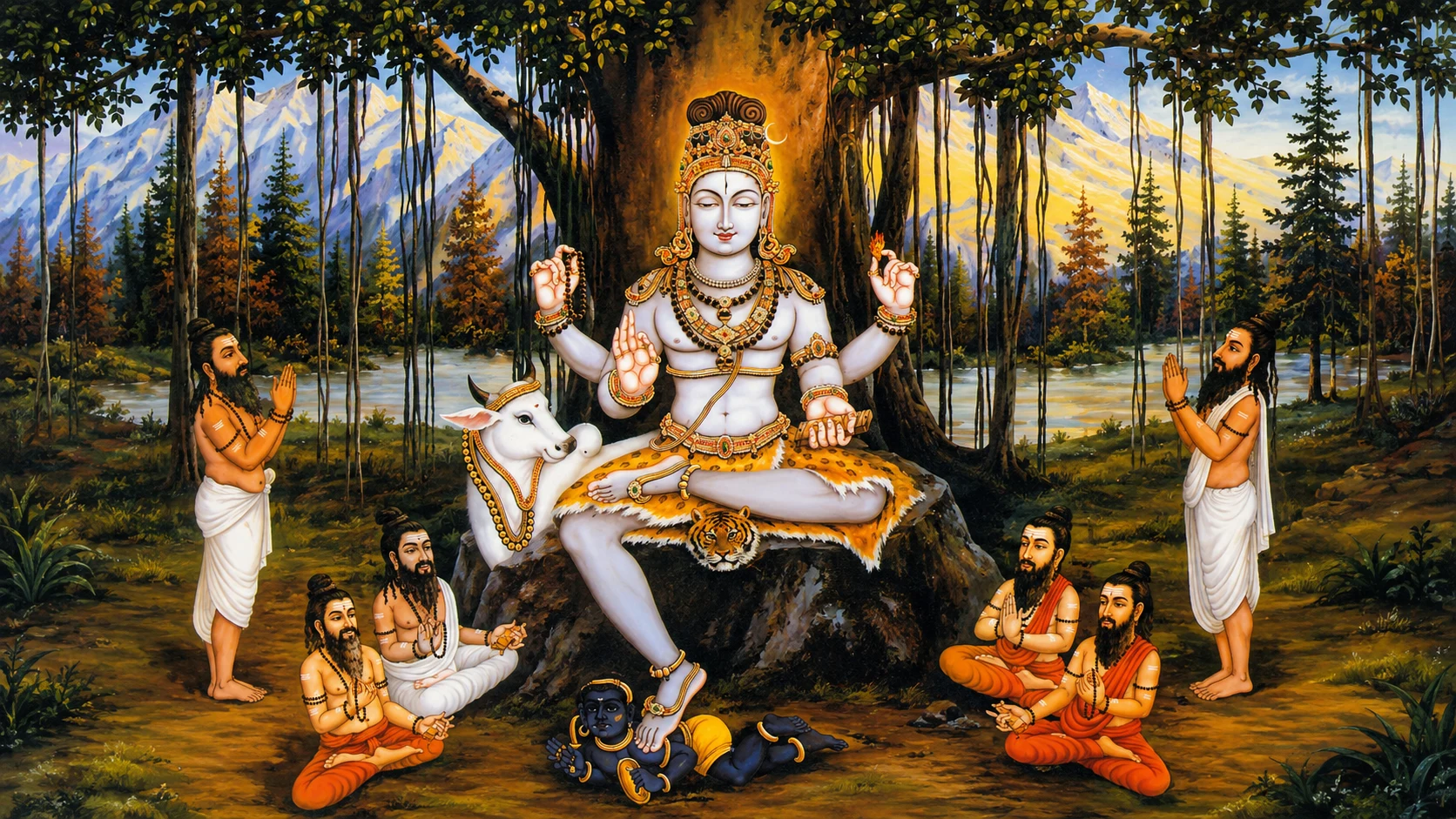
Among the seven disciplines that shape a life of right living - Knowledge, Body, Mind, Wealth, Duty, Purpose, and Spirit - one stands as the ground on which all the others are built: the Discipline of Knowledge, what our tradition calls Viveka, the discipline of the intellect. Without it, every other discipline eventually loses its way.
The Only Weapon to Pierce Ignorance
At the root of all human suffering lies one condition: ignorance of the truth. Not ignorance of facts, but a deeper confusion - not knowing who we truly are. This ignorance gives rise to man's oldest enemy, the ego: a false understanding of one's own identity, mistaking the temporary for the eternal and the self for the body, the job title, the bank balance, the opinions of strangers online.
Only a sharp, disciplined intellect can pierce through this veil. Viveka - the power of discernment - is the one instrument capable of separating the real from the unreal, the eternal from the passing, and guiding a person back to the true Self.
Not Just Our Tradition - Every Serious Tradition Found This First
Here is what should give the modern seeker real confidence: this is not a claim you have to take on faith from one lineage. It is a conclusion that the world's major traditions of wisdom arrived at independently, with no contact between them.
Adi Sankara wrote his seminal treatise, Viveka Chudamani - "the crest jewel of discrimination" - placing discernment at the very center of spiritual life. The most sacred of all mantras, the Gayatri Mantra, given to seekers at their most auspicious initiation, is at its heart a prayer for exactly this: clarity of thinking. Long before philosophy gave it a name, this tradition understood that a clear mind was the beginning of every spiritual pursuit.
But travel west, to ancient Greece, and you find Aristotle building his entire system of ethics around a strikingly similar idea: phronesis, practical wisdom. He held that good intentions were not enough - a person needed the discernment to know which action was right, and why - and that this one intellectual virtue was the pillar supporting all the others: courage, justice, temperance. Without it, even a well-meaning person acts blindly.
Travel further east, to the Buddha's teaching, and you find the same architecture again. The Noble Eightfold Path rests on three trainings - wisdom, ethical conduct, and concentration - and wisdom, prajna, is described as both the beginning and the end of the path. A mind burdened by confusion, the teaching says, cannot develop the clarity that everything else depends on.
Three traditions. Three names - Viveka, Phronesis, Prajna. One shared discovery: clarity of intellect isn't one virtue among many. It's the doorway all the others walk through.
Only the Intellect Can Tame the Mind
The mind is famously the most uncontrollable force in existence - restless, wandering, easily clouded. A clouded mind is the single greatest obstacle on the path to truth.
Yet the mind cannot discipline itself. Left alone, it simply follows its own momentum - toward the next notification, the next craving, the next old grievance. The mind can only be tamed by something above it: the intellect. And not by intellect alone, but by a clear intellect fused with unshakeable will - Vairagya, dispassion. Together, a sharp intellect and a firm will can turn the restless mind away from distraction and direct it steadily toward truth.
Why This Is the Foundation for Every Other Discipline
It's easy to state that the intellect is foundational. It's more useful to see exactly how:
- Body: A person without discernment eats what is advertised, not what nourishes; exercises out of vanity or not at all. A clear intellect knows the difference between caring for the body and being enslaved to its cravings.
- Wealth: Without viveka, money is chased for status or hoarded from fear. With it, wealth is earned honestly and used with purpose, because the person can see clearly what is enough.
- Duty: An undiscerning mind confuses duty with obligation forced by others, or abandons it under pressure. A clear intellect sees one's actual responsibilities and fulfils them without resentment.
- Purpose: Without discernment, purpose gets borrowed from family expectation or social comparison. With it, a person can distinguish their true calling from a well-dressed distraction.
- Mind and Spirit: As already seen, only a disciplined intellect can steady the mind at all, and it is that same clarity, matured into Gnanam, that ultimately allows the seeker to surrender at the feet of God.
This is why the Discipline of Knowledge is not simply a discipline among seven - it is the lens through which the other six are correctly seen. Sharpen it, and every other discipline finds its right direction. Neglect it, and the other six are built on sand.
Why This Matters More Today Than Ever
The ancients diagnosed ignorance as scarcity of understanding. The modern seeker's ignorance looks different - it is distortion, not scarcity. We are not starved of information; we are drowning in it, and much of it is designed - by algorithms optimized for attention, not truth - to look convincing whether or not it's real.
This is precisely why viveka is not an antique concept to be admired from a respectful distance. It is the exact faculty a person needs to scroll through a feed of half-truths and competing outrage and still ask: is this real, or does it only feel urgent? Is this mine, or did I just absorb it? The ancient sword that once cut through ego and false identity is the same sword needed today to cut through noise dressed up as knowledge. The battlefield has changed. The weapon required has not.
How to Practice the Discipline of Intellect
This is not abstract theory - it is a path that can be walked deliberately, in four steps:
- Pray for clarity: Before anything else, ask - sincerely, humbly - for clear thinking. This is the first and most honest admission that the mind cannot sharpen itself alone.
- Learn from scripture and from those who have walked the path: Study what is right, real, and eternal, not to accumulate facts but to borrow the discernment of those who have already seen clearly.
- Learn from your own experience: Watch cause and effect in your own life without flinching - where did clarity lead you well, and where did confusion cost you? This is where borrowed wisdom becomes your own.
- Practice vigilantly, without pause: Discernment is not a switch you flip once. Left unpracticed, it dulls; exercised daily, it sharpens - like any faculty, it either grows or it atrophies.
Practice and grace are not opposites here - they are partners. The effort in these four steps is what prepares the ground; what finally dawns on that prepared ground, in its own time, is grace.
Only Gnanam Can Infer the Truth
God is beyond the reach of the intellect alone. It is only by grace that Gnanam - true, realized wisdom - can infer the truth to a sincere seeker. This is why Shiva is worshipped as the Ultimate Truth, and Shakti as Gnana Rupini, the very embodiment of that wisdom. Shiva and Shakti are inseparable - it is through Shakti's grace that Gnanam dawns upon the one who has prepared for it, and through that dawning, Shiva is finally realized.
In Closing
For the modern seeker, right living doesn't begin with willpower over the body, or discipline over wealth, or clarity of purpose - it begins one step earlier, with a mind capable of seeing clearly in the first place. Sharpen the intellect, and the body finds its right care, the mind finds its master, wealth finds its purpose, duty finds its clarity, purpose finds its direction, and the spirit finds its way home.
In an age that will hand you a thousand convincing untruths before breakfast, this ancient discipline may be the most practical skill you will ever cultivate. Begin here. Begin with Viveka.