
The History of Murugan
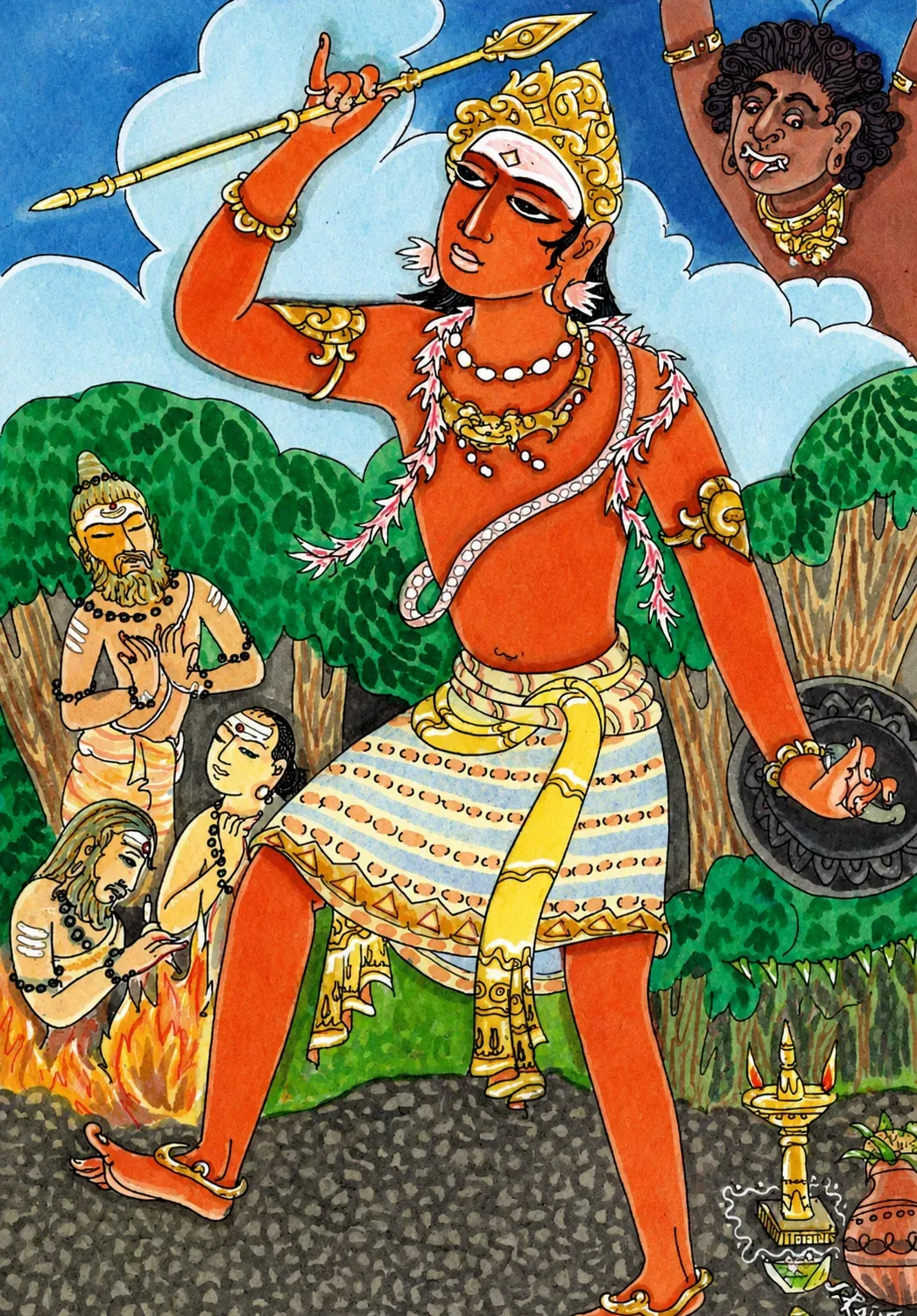
Lord Murugan is a figure born of two worlds. In the ancient south, he was Ceyon, the Red God of the Tamil hills, celebrated in tribal dances. In the north, the scriptures spoke of Skanda, the warrior born of fire and raised by the stars of the Pleiades to lead the divine armies against the demon Taraka. Over the centuries, these two paths merged into a single deity, representing both physical courage with spiritual light.
As the supreme teacher, he famously explained the sacred sound Aum to his father, Shiva. His six faces represent the five natural elements and the Life Principle, showing he is the master of all creation. His two wives, Valli and Devasena, represent desire and right action, the twin forces of aspiration and duty that shape our path.
At the heart of his legend is the Vel, the sacred spear of wisdom. As a symbol of spiritual knowledge, it represents the human brain and spinal cord, pointing to the inner light that pierces the ego. The story of Murugan remains a testament to the union of these ancient paths, showing how the outer duties of the warrior and the inner search of the seeker can find harmony in a single life.
The Six Sacred Camps
The Arupadai Veedu, the six sacred camps of Lord Murugan, are actual temples built across Tamil Nadu. In yogic wisdom, they represent the six primary chakras of the human body. Each camp tells a story from Murugan's life, showing how the seeker must face and master the different parts of the mind to awaken the crown of self-knowledge.
Thirupparankundram
The Sacred Union of Earth & Spirit
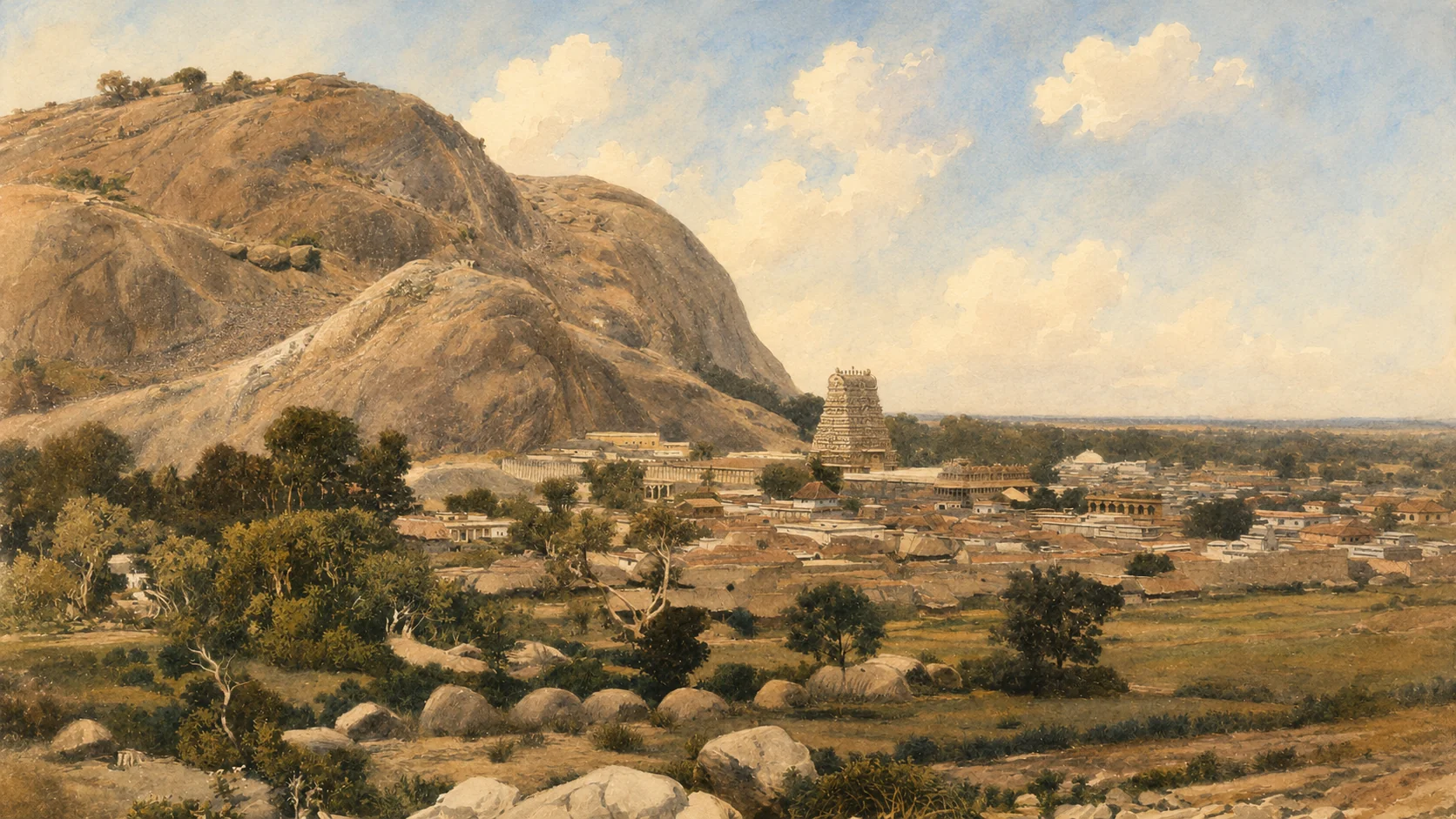
Located in Thirupparankundram near Madurai, this ancient cave temple is the site of Murugan's marriage to Deivayanai, the daughter of Indra. Having conquered the forces of ego, the warrior became a householder, combining his cosmic power with earthly duties.
In yogic terms, Thirupparankundram represents the Muladhara chakra, which is the root center of stability, survival, and physical grounding. By entering a sacred marriage here, Murugan teaches that the spiritual life does not require us to escape the physical world. Instead, we must ground our divine hopes, building a stable foundation where the earthly and the spiritual work together in harmony.
Tiruchendur
The Transformation of the Shadow
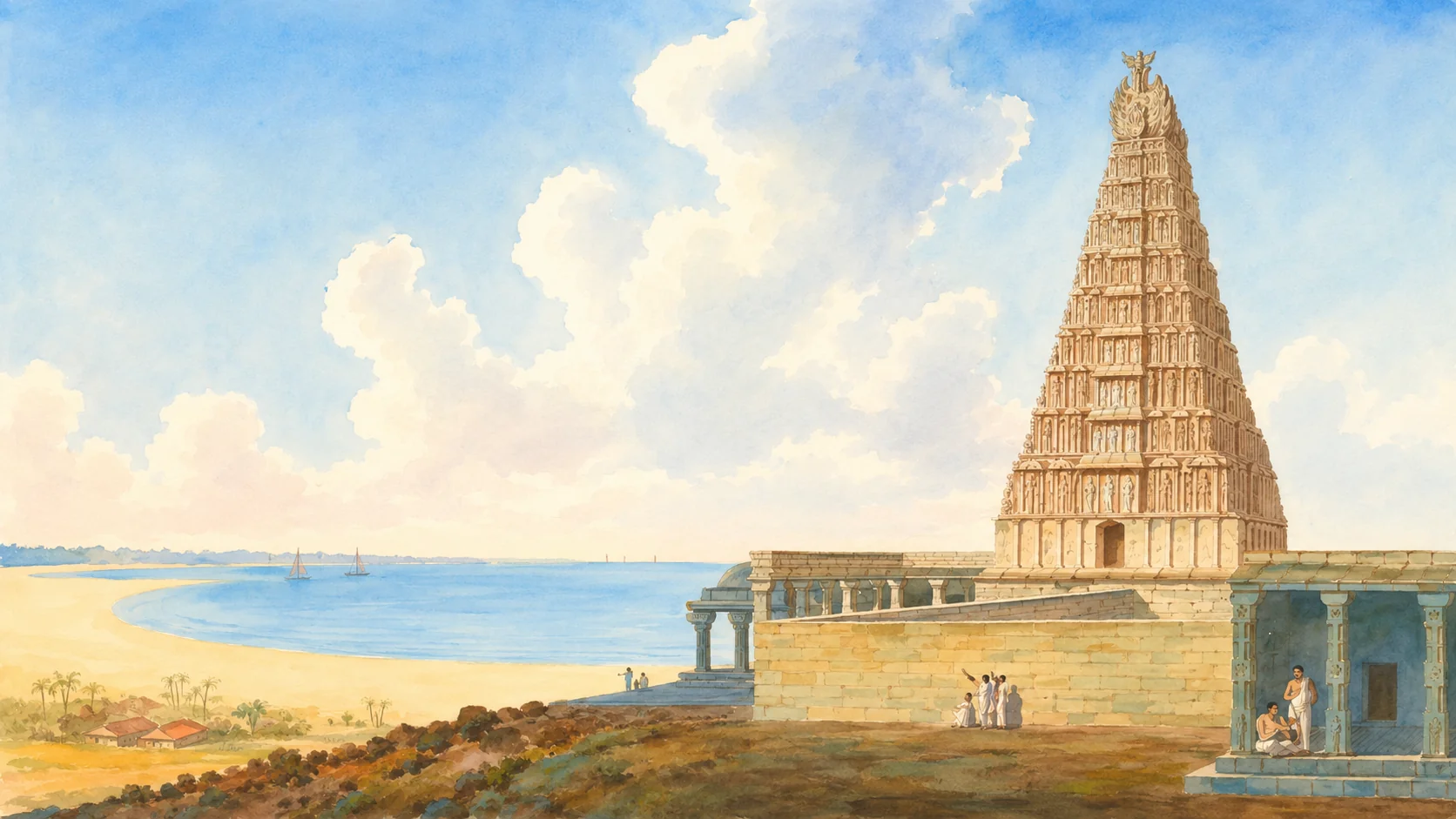
Tiruchendur is the only camp located on the seashore. It is the site of the legendary battle of Surasamharam, where Murugan faced the demon-king Soorapadman. Using the Shaktivel, the spear of wisdom given by his mother Goddess Parvati, he defeated the demon. Yet, out of deep kindness, he did not destroy his enemy. Instead, he split him in two, transforming him into a peacock for his mount and a rooster for his banner.
Tiruchendur corresponds to the Svadhishthana chakra, which rules the element of water, emotions, and hidden desires. The sea represents the restless waves of the mind. By transforming Soorapadman rather than killing him, Murugan shows that we should not simply repress our dark or selfish impulses. We must face them in the light of awareness and guide them toward a higher purpose.
Palani
The Path of Renunciation
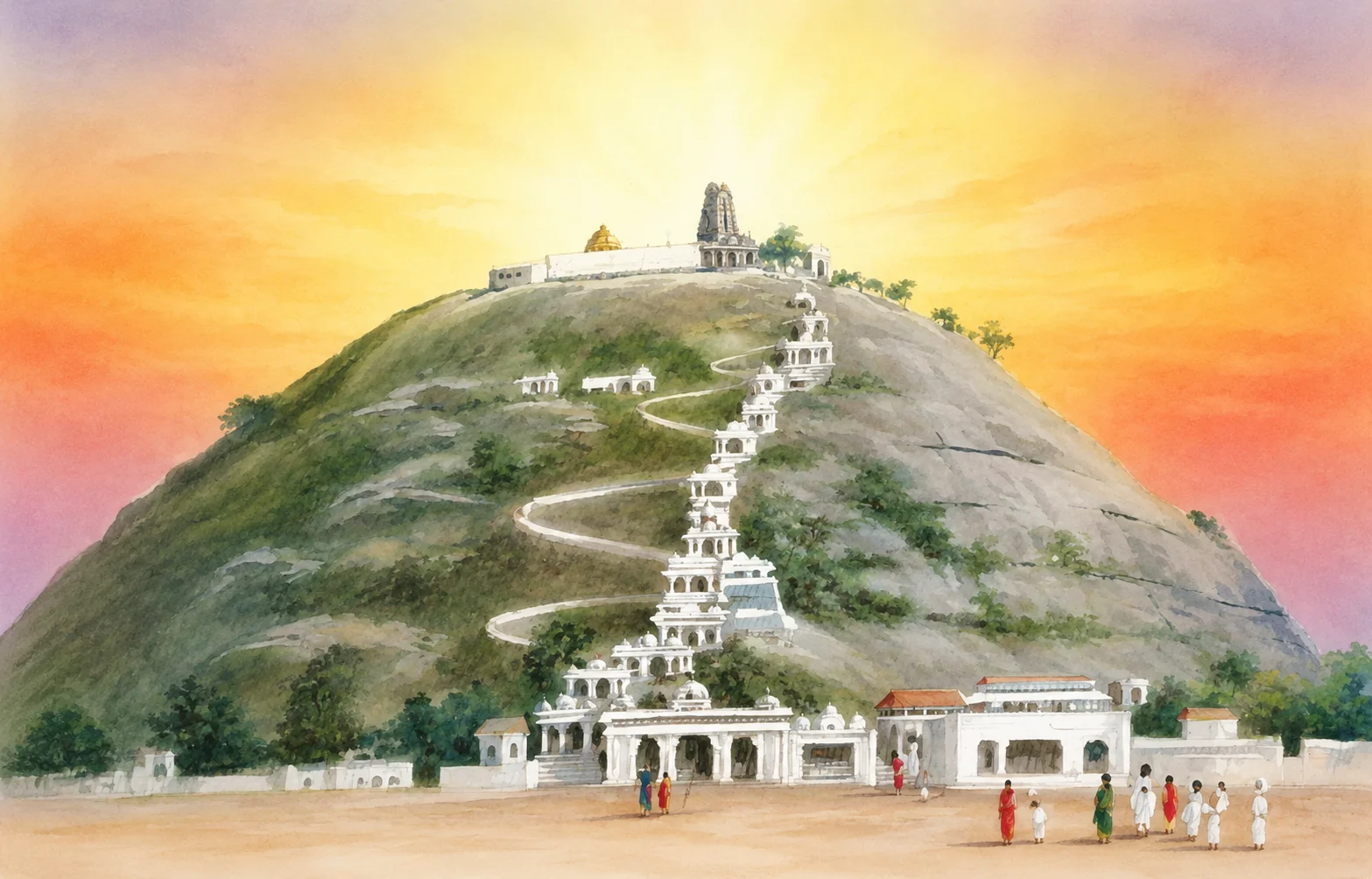
The famous hill temple of Palani is built around the story of the Gyana-pazham, the Fruit of Wisdom. When the sage Narada brought a single divine fruit to Shiva's court, he set a challenge: whoever went around the world first would win it. Murugan set off on his peacock to fly across the globe, but his brother Ganesha simply walked around his parents, saying they were the source of the entire universe. Ganesha won the fruit. Upset by the loss, Murugan renounced his royal life, left his family, and went to the Palani hills as Dhandayudhapani, a simple monk holding only a staff.
Palani represents the Manipura chakra, the center of willpower and personal ego. To master this fire, we must let go of pride. Murugan's renunciation shows that we must shed our attachments to find true wisdom. The main deity is made of Navapashanam, a special mix of nine medicinal herbs and minerals created by the ancient sage Bogar, representing the healing power of spiritual transformation.
Swamimalai
The Teacher of the Father
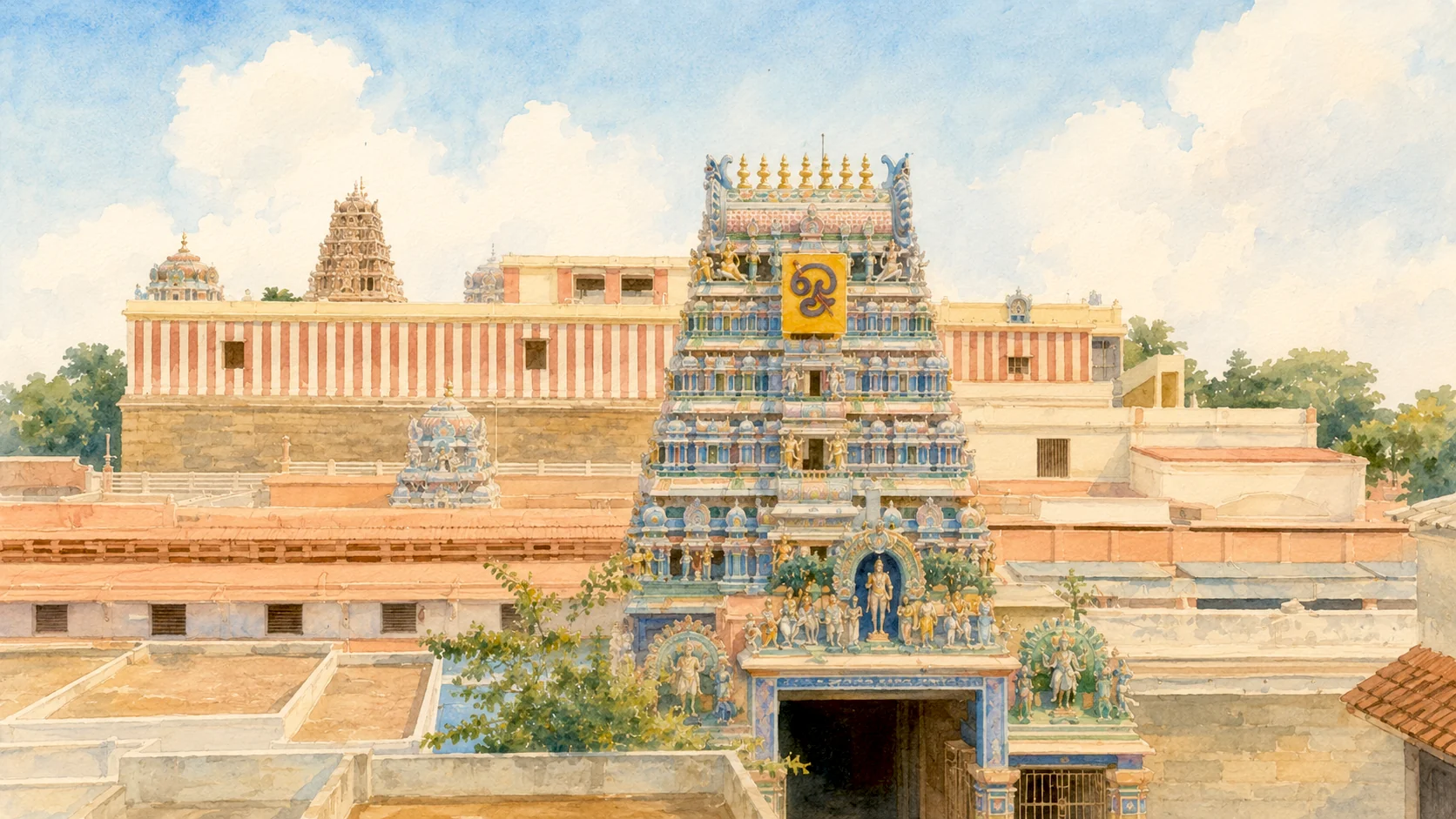
At Swamimalai, the natural order of the universe was beautifully upended. When the creator god Brahma showed ignorance regarding the meaning of the sacred sound Aum, the child-god Murugan imprisoned him. When Lord Shiva questioned his son, Murugan questioned his father to explain the mantra. Shiva admitted he did not know and sat before his child-god as a humble student. Murugan then whispered the secret of the Pranava Mantra into Shiva's ear, earning the title Swaminatha, the teacher of his own father.
Swamimalai rules the Anahata chakra, the center of spiritual devotion and inner wisdom. Here, the intellect must bow to the pure devotion of the heart to hear the inner sound of creation. It reminds us that intellectual learning is secondary to the simple, loving wisdom that arises when the heart opens to the teacher within.
Thiruthani
The Stillness of Peace
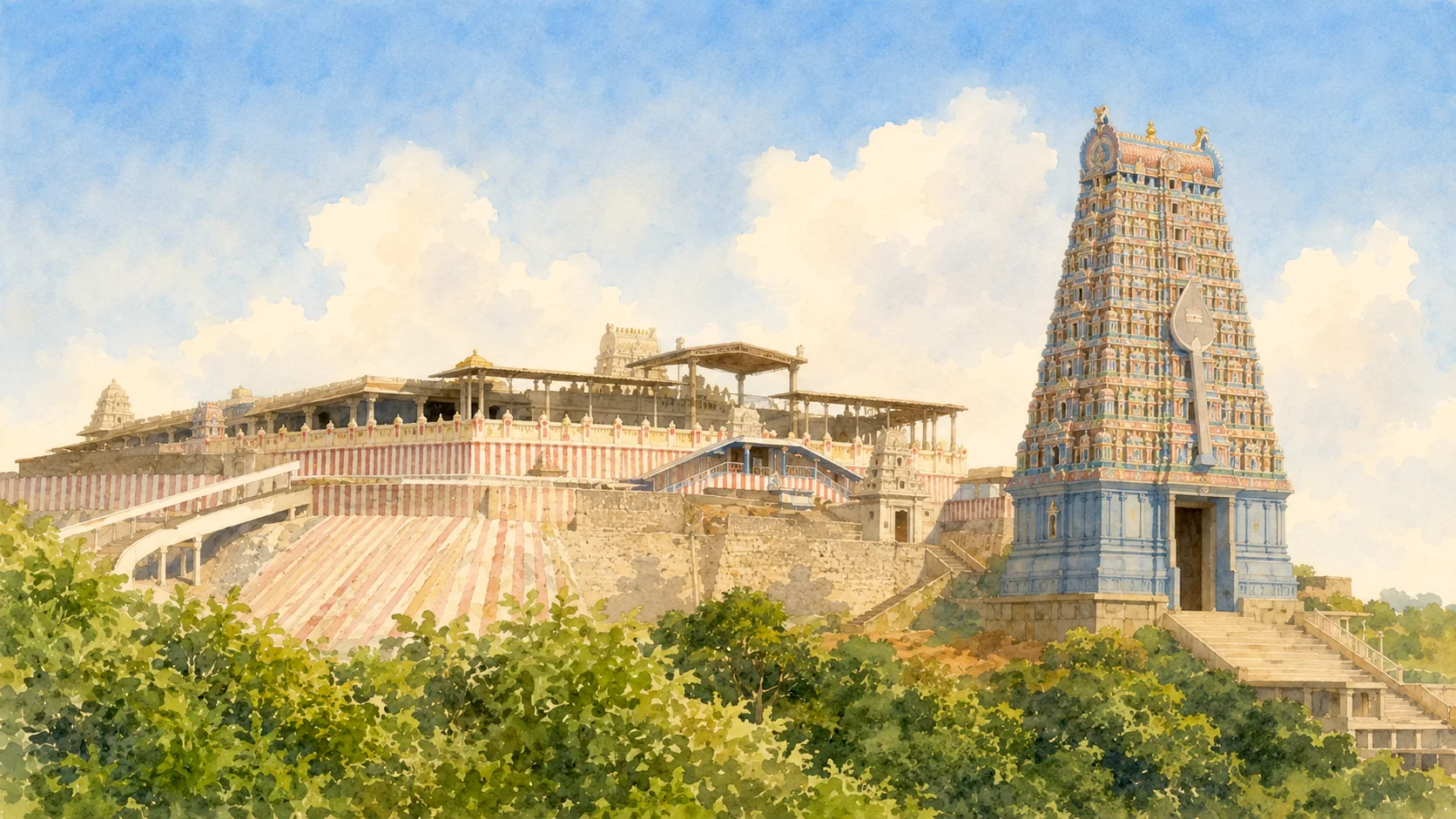
After his intense battles and his marriage to Valli, the tribal huntress, Murugan sought a place to soothe his mind and find rest. He chose the hill of Thiruthani. Here, his anger subsided, and he entered a state of peaceful calm. The temple is reached by climbing 365 stone steps, each representing a day of the year, symbolizing the daily practice needed to maintain peace of mind.
Thiruthani corresponds to the Vishuddhi chakra, which rules communication, purification, and space. Once internal conflicts are resolved, the seeker must enter the quiet space of inner silence. In this abode, Murugan rests without his weapons, showing that true purification is not loud declaration, but the peace of silent awareness.
Pazhamudircholai
The Play of Divine Vision
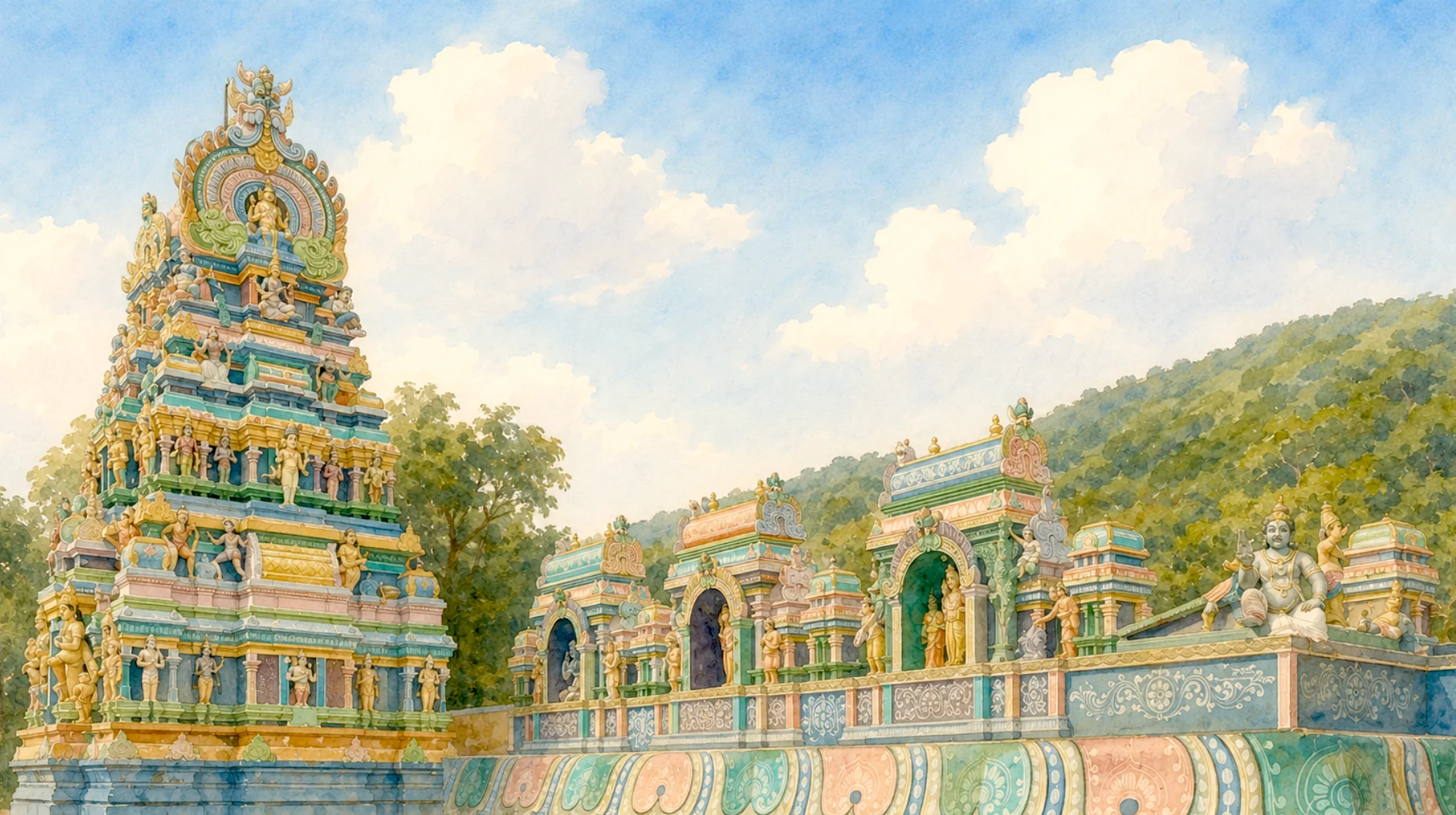
Located in Pazhamudircholai deep in the green forests of the Alagar Hills, this forest camp is famous for the playful meeting between the child-god Murugan and Avvaiyar, the legendary Tamil poetess. Disguised as a simple shepherd boy sitting in a wild jamun tree, he offered to shake down some fruit. He asked her if she wanted roasted fruit or unroasted fruit. Laughing at the boy's silly question, she asked for roasted fruit. When he shook the branches, the fruits fell in the dust. As Avvaiyar blew on the fruit to clean it, the boy laughed: 'Ah, they are indeed hot! You blow on them to cool them down!' Stunned by this clever riddle, Avvaiyar recognized the divine wisdom of the child-god, who then revealed his true form.
Pazhamudircholai represents the Ajna chakra, the third eye of intuition and divine vision. Here, Murugan teaches that true wisdom is not the dry knowledge of books, but the flexible, joyful play of awareness. To open the third eye is to see through intellectual pride and appreciate the sweet simplicity of life, where the divine is found in the most humble moments.