
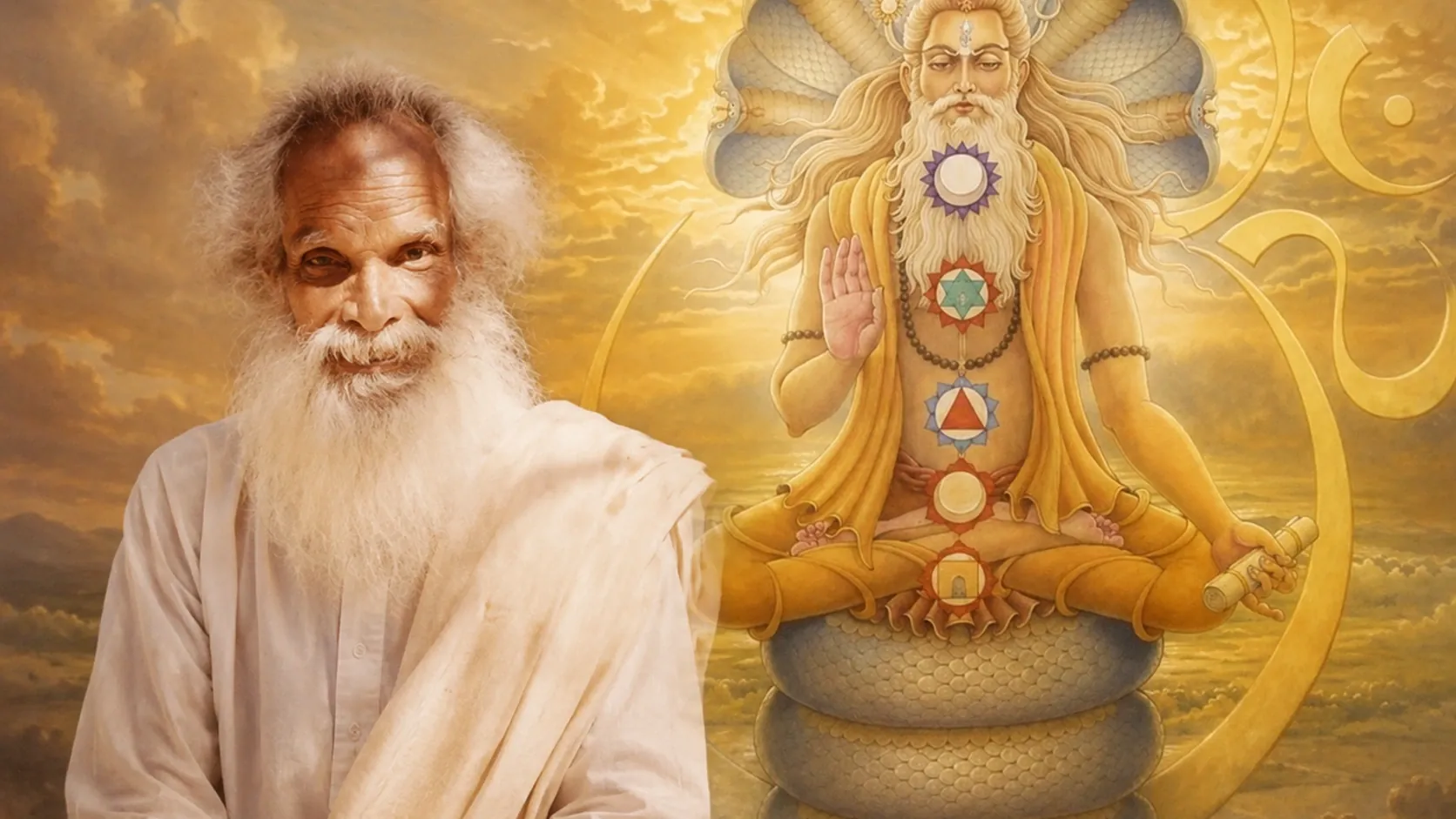
There's a quiet comfort in discovering that two wise people, born centuries and worlds apart, arrived at the same truth using different words. That's exactly what happens when you place Shivapuri Baba's teaching of Right Life next to Patanjali's Ashtanga Yoga. One was a wandering saint who lived for over a century and walked the earth; the other was a sage who, over two thousand years ago, compiled the science of yoga into 196 crisp aphorisms. Yet both point to the same door: discipline the body, steady the mind, and the spirit reveals itself.
Let's unpack this in plain language - no Sanskrit degree required.
Who Was Shivapuri Baba?
Shivapuri Baba - born Govindananda Bharati - was a Himalayan saint believed to have lived from 1826 to 1963, spending decades in intense penance in the Himalayas before God-realization, and then walking around most of the world to share what he had learned. His message wasn't complicated. He called it "Right Life," built on two simple pillars - discrimination (using your intelligence wisely) and devotion (love and surrender). And Right Life, he said, rests on three disciplines:
- Physical discipline: taking care of the body: cleanliness, moderation, good habits, and staying true to one's duty (swadharma) instead of chasing useless distractions.
- Moral discipline: taming the mind: truthfulness, self-control, good behaviour, and responsibility toward others. This is what brings harmony into family and society.
- Spiritual discipline: turning toward God or your own deeper self through prayer and contemplation, which finally removes ignorance and grants lasting peace.
His logic was refreshingly practical: a healthy body gives you pleasure, a disciplined mind gives you serenity, but only spiritual discipline gives you real, permanent peace - because everything else dies with the body. Only this third layer is untouched by death.
Who Was Patanjali, and What Is Ashtanga Yoga?
Patanjali is considered the father of classical yoga. In his Yoga Sutras, he lays out an eight-limbed path - Ashtanga Yoga - as a step-by-step method to still the mind and realize the Self. The eight limbs are:
- Yama: restraints (non-violence, truthfulness, non-stealing, moderation, non-greed)
- Niyama: observances (cleanliness, contentment, discipline, self-study, surrender to God)
- Asana: physical postures and stability
- Pranayama: conscious breath control
- Pratyahara: withdrawing the senses from external distraction
- Dharana: single-pointed concentration
- Dhyana: sustained meditation
- Samadhi: union, the final dissolving into pure awareness
At first glance, eight limbs look far more elaborate than three disciplines. But group them together, and something interesting happens.
The Same Map, Drawn Twice
| Shivapuri Baba's Discipline | Patanjali's Limbs | What It's Really About |
|---|---|---|
| Physical Discipline | Yama, Niyama, Asana | Ethical living, clean habits, and a healthy, steady body - the ground floor of any spiritual life |
| Moral / Mental Discipline | Pranayama, Pratyahara, Dharana | Controlling the breath and senses so the restless mind stops running outward and starts turning inward |
| Spiritual Discipline | Dhyana, Samadhi | Deep meditation dissolving into union with the Self or God - the final freedom |
Look closely and you'll notice both teachers are saying: you cannot skip steps. You can't meditate your way to enlightenment while ignoring your health and your ethics, and you can't call yourself disciplined just because you eat well and exercise if your mind is still full of anger, greed, and restlessness. Body prepares the ground. Mind clears the weeds. Spirit is the harvest.
Why This Matters for a Common Man
Most of us aren't going to renounce the world and meditate in a Himalayan cave. Both Shivapuri Baba and Patanjali knew that - and neither of them asked us to. Shivapuri Baba was explicit that withdrawal from the world doesn't mean rejecting it; it means cutting out only what's unnecessary. Patanjali's Yamas and Niyamas are things any householder, employee, or parent can practice at the breakfast table.
Here's what the overlap actually means for daily life:
- Start with the body: Sleep on time, eat with moderation, keep your surroundings and habits clean. This isn't vanity - both traditions treat it as spiritual groundwork, not a separate "fitness" activity.
- Then work on the mind: Practice truthfulness, keep your word, control your temper, and don't let your senses run the show - whether that's food, screens, or gossip. This is where breath-awareness (even five minutes of quiet breathing) does real work.
- Only then does the spirit open: Real peace, both teachers agree, doesn't come from pleasure (which fades) or even serenity (which can be disturbed) - it comes from a settled inward stillness that doesn't depend on outer circumstances at all.
A Modern Update: The Seven Disciplines of the Sri Murugan Research Centre
Three disciplines are elegant. Eight limbs are precise. But if you're a working professional trying to actually live this, both frameworks quietly assume things like "duty," "career," and "money" are just minor details tucked inside "physical discipline." The Sri Murugan Research Centre (SMRC), based in Madurai, takes Shivapuri Baba's original three-fold teaching and unpacks it into seven disciplines - explicitly built as a practical, modern curriculum for householders, not renunciates. It even opens with a line attributed to Shivapuri Baba himself: worldly duty isn't a distraction from the spiritual path, it's the very foyer you must pass through to reach it.
The seven disciplines are:
- Knowledge (Jnana): sharpening the intellect to tell right from wrong (viveka) instead of drifting on emotional impulse.
- Body (Kaya): treating the body as a disciplined instrument, resting on three pillars: eating for health rather than craving, hygiene, and 7–8 hours of proper sleep.
- Mind (Manas): tending the mind like a garden, weeding out fear, anger, and arrogance while cultivating truthfulness, compassion, and calm.
- Wealth (Artha): earning, saving, and spending ethically, so money serves your duties instead of your vanity or ego.
- Duties (Dharma): honouring obligations across four widening circles: yourself, your family, your profession, and society.
- Purpose (Paropakara): moving from self-interest to genuinely leaving people and places better than you found them.
- Spirit (Atman): the final stage of meditation, love, and self-realization, where the sense of separate self dissolves.
| Shivapuri Baba (3) | Patanjali's Ashtanga (8) | SMRC Framework (7) |
|---|---|---|
| Physical Discipline | Yama, Niyama, Asana | Body, Wealth |
| Moral / Mental Discipline | Pranayama, Pratyahara, Dharana | Knowledge, Mind, Duties, Purpose |
| Spiritual Discipline | Dhyana, Samadhi | Spirit |
Notice what SMRC has done: it hasn't invented anything new - it has simply given career, money, and social contribution their own named seat at the table, instead of leaving them implied inside "physical" or "moral" discipline. For a common man juggling a job, a family, and bills, that's the difference between an abstract philosophy and something you can actually check yourself against on a Monday morning.
Turning It Into a Daily Routine
Here is how the seven disciplines translate into an ordinary day - no cave, no renunciation required:
- Morning (Knowledge & Body): Before checking your phone, take a few minutes to set an intention for the day (Jnana). Follow with basic movement, a proper breakfast, and a fixed sleep-wake rhythm the night before (Kaya).
- At work (Wealth & Duties): Do your job with integrity rather than cutting corners; spend and save with discipline rather than impulse purchases. Showing up honestly to your desk is the practice, not a break from it.
- Through the day (Mind): Notice when anger, comparison, or anxiety show up, and consciously choose the opposite response - this is the "gardening" SMRC describes, done in real time during a stressful meeting or traffic jam.
- Evenings (Purpose): Ask a simple daily question: did I leave someone or something better than I found it today, even in a small way? A helpful word, a fair decision, an act of patience - this is Paropakara in miniature.
- Before sleep (Spirit): Ten quiet minutes of prayer, reflection, or meditation, letting go of the day's roles - employee, parent, spouse - and simply resting in stillness.
SMRC also suggests a seven-week reflective practice - spending one full week focused on each discipline, asking yourself a pointed question daily. Pick one discipline a week, ask yourself one honest question about it each evening, and let the awareness itself do the shaping.
The Real Takeaway
Three disciplines, eight limbs, seven modern categories - strip away the numbers and the Sanskrit, and Shivapuri Baba, Patanjali, and SMRC are all describing the same instruction manual for being human. All three insist that enlightenment is not an escape from ordinary life - it's what happens when ordinary life, including your job and your bank balance, is lived with total sincerity, one layer at a time: a cared-for body, an honest mind, duties done in full, and finally, a spirit that has stopped searching because it has found what it was looking for all along.
You don't need a Himalayan cave or a Sanskrit scholar to begin. You just need to start where you are - with the body, the desk, and the family you already have.
One Life: Live it well
Sukhama Santhoshama Ananthama